
Heating Efficiency Without a New Boiler
The boiler is one part. The radiators, pipework, valves and cylinder decide how much of its heat you get and how hard it works to deliver it. This is the wet-side guide, in the order that pays.
Most of the advice about heating efficiency is really advice about buying a boiler. I do not sell boilers. Rosebourne is not Gas Safe or OFTEC registered, so the appliance on the wall is somebody else's job and I will give you the name of a good one. What I do is everything from the boiler outwards, and that is where most houses round here are losing heat.
This guide is for the houses I actually work in: 1930s semis in Andover, cottages in Great Bedwyn and Ramsbury with radiators added a room at a time, Victorian terraces in Marlborough and Hungerford, and the estates in Tidworth and Ludgershall where every house got the same system in the same year. The order below is the order I would do the work in my own home, cheapest and most certain first.
The Order That Pays
Each step below makes the next one work better, which is why the order matters. Flushing a system and then leaving it out of balance wastes half the flush. Fitting a filter to a system that is already full of sludge gives the filter a month before it is blocked. Start at the top.
| Step | What it fixes | Price |
|---|---|---|
| Bleed and balance | Radiators that heat unevenly, rooms that never catch up, a boiler turned up to compensate | From £150 + VAT |
| Thermostatic valves | Spare rooms heated to lounge temperature all day | From £158 + VAT per radiator |
| Magnetic filter | Sludge that is still moving, before it settles in the radiators and the boiler heat exchanger | Quoted with the flush or on its own |
| Power flush | Sludge that has already settled: cold bottoms, black water, a hot noisy pump | From £450 + VAT, £785 + VAT for twelve radiators |
| Lagging and the cylinder | Heat lost from pipes in lofts and garages, and from a cylinder in a thin jacket | From £150 + VAT for a lagging visit |
| Radiator sizing | Undersized radiators that force a high flow temperature, and stand in the way of a heat pump later | From £250 + VAT labour per radiator |
| Wet underfloor heating | Large rooms, extensions and kitchens, where a low flow temperature suits the floor | Quoted after survey |
All prices exclude VAT (20%) Every job gets a written fixed price before anything is drained down. Minimum visit From £150 + VAT.
Balancing: The Cheapest Heating Work There Is
Water is lazy. It takes the shortest route round the circuit, so the radiators nearest the boiler roar away while the one at the far end of the landing gets whatever trickle is left. The room thermostat sits in the hallway, which is hot, so it tells the boiler the house is warm while the back bedroom is still cold. The usual response is to turn the boiler's flow temperature up and the thermostat up with it, and now the whole house is being heated harder to fix one room.
Balancing is the fix. Every radiator has two valves: the one you turn, and the lockshield under a plastic cap at the other end. The lockshield sets how much water that radiator is allowed. Close the near ones down a little, open the far ones up, and the flow shares itself out so every radiator warms at about the same rate and the water comes back to the boiler at the temperature it was designed for. On a condensing boiler that return temperature is the whole point: a cooler return lets it condense and recover heat it would otherwise send up the flue.
It is done with a pair of clip-on thermometers, a radiator key and patience, usually working through the system twice. On a house with up to fourteen radiators it is one visit at From £150 + VAT, which is the standard minimum, and it is the first thing I would do to any system that has never had it done. Most have not.
How to tell if yours needs it
- •Some radiators are hot within ten minutes and others take an hour
- •The room with the thermostat is comfortable and the furthest bedroom never is
- •The pipe coming back to the boiler is nearly as hot as the one leaving it
- •Somebody has set the boiler to maximum to make the back of the house warm
Thermostatic Valves: Stop Heating the Rooms Nobody Is In
A thermostatic radiator valve shuts its own radiator down once the room reaches the number on the head. That sounds small until you count the rooms: a spare bedroom, a study, a dining room used twice a week, a utility. Without a TRV each of those is heated to the same temperature as the lounge every time the boiler runs. With one, they idle at fifteen or sixteen degrees and the boiler's effort goes where people are.
Two rules. The room with the main thermostat does not get one, or the two fight each other: the TRV closes, the thermostat never satisfies, and the boiler runs on. And a TRV that is thirty years old is probably stuck; the pin under the head seizes, and the valve is either permanently open or permanently shut. A new body and head is From £158 + VAT per radiator, and on an old system I would do them while the system is drained for a flush rather than as a separate job.
The honest note on controls: I fit the valves, the lockshields and the pipework. Programmers, room thermostats and smart controls are wired, and the wiring is the electrician's or the boiler engineer's. If you are having the boiler serviced anyway, that is the moment to have the controls looked at, and I will happily say which ones make the wet side easier to run.
Sludge: The Filter, the Flush, and Which One You Need
Every steel radiator rusts a little from the inside, and the rust comes off as a fine black powder called magnetite. It travels round the system with the water, settles in the bottom of the radiators where the flow is slowest, and collects in the narrow passages of the boiler's heat exchanger and the pump. A radiator with a cold band across the bottom is full of it. A pump that is hot to touch and humming is pushing water through it. A boiler that locks out on a system that worked fine two winters ago is often being starved by it.
A magnetic filter
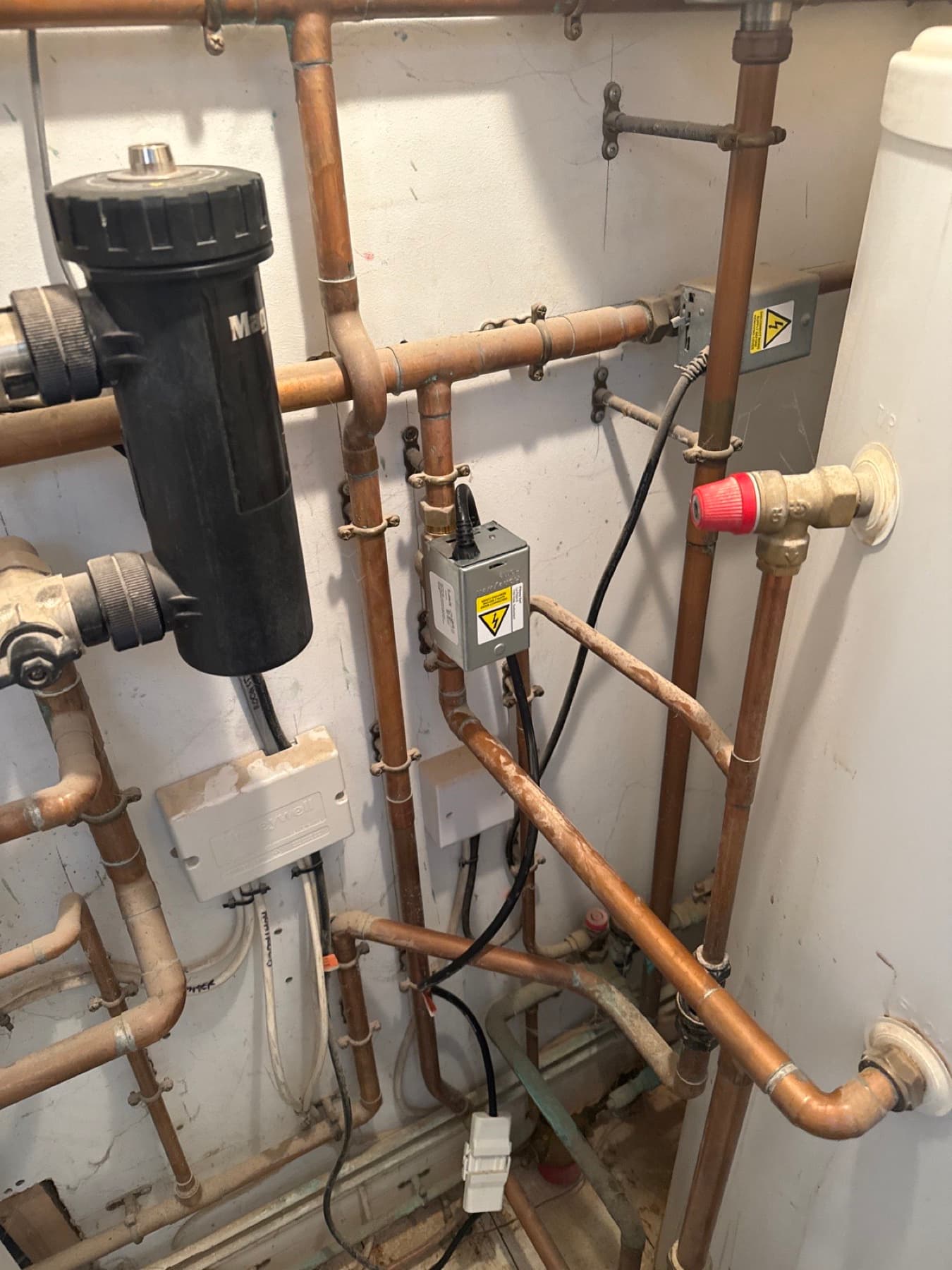
Sits on the return pipe just before the boiler and pulls the magnetite out of the water as it passes, so it never reaches the heat exchanger. It is cleaned out once a year, which takes ten minutes and is the single most useful thing to do at a boiler service. It catches what is still moving. It does not shift what has already settled.
Fitted with a flush or on its own; the MagnaClean in the photo above is the one I use most.
A power flush
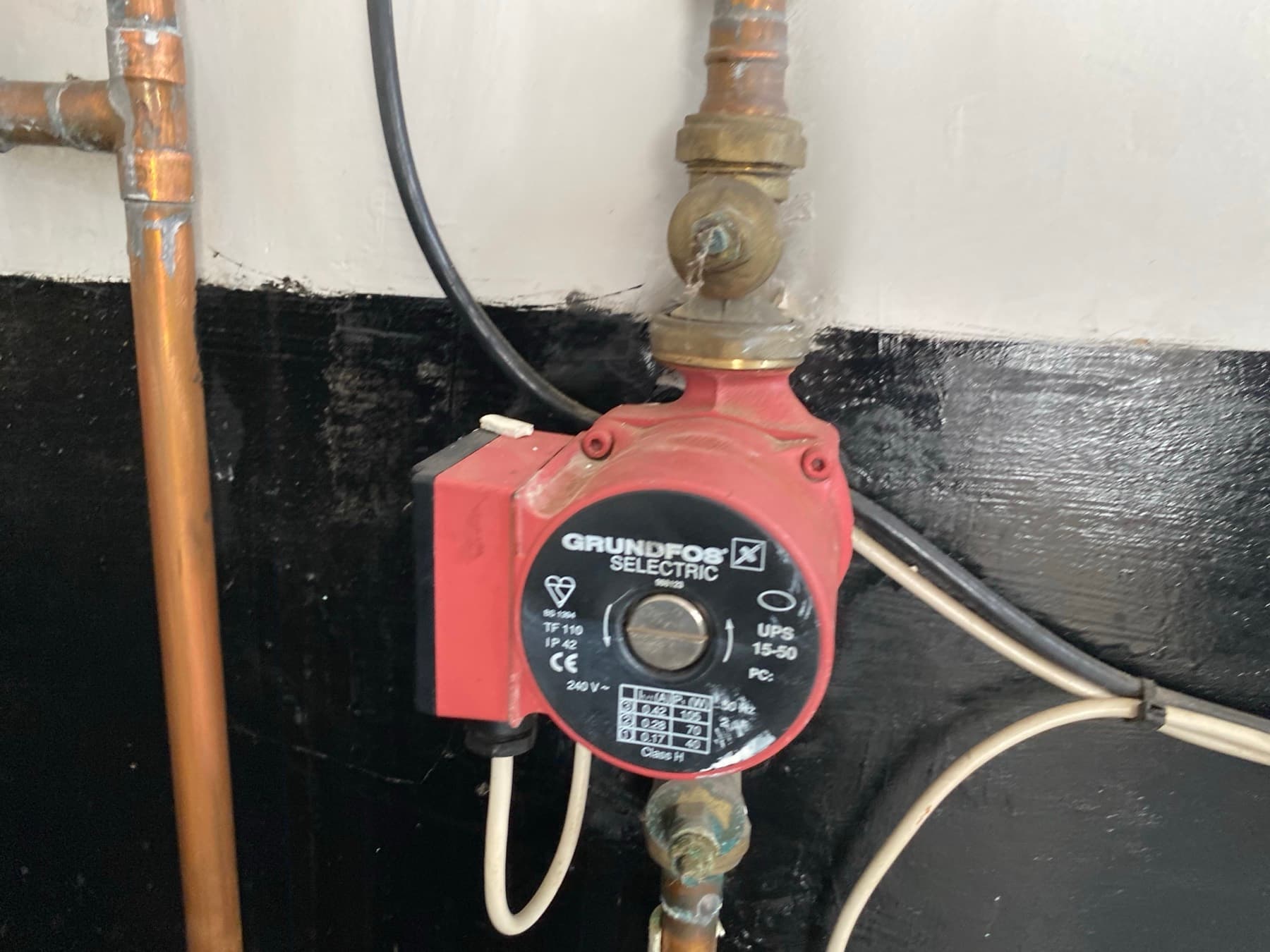
A pump connected in place of the circulating pump pushes cleaner through each radiator in turn, at a flow the system's own pump could never manage, loosens the settled sludge and carries it out to the drain. The system is refilled with fresh inhibitor so the rusting slows right down. It takes most of a day.
From £450 + VAT; £785 + VAT for a twelve-radiator house. Fixed price before the hoses come out.
Which one? If the radiators are slow at the top, that is air, and the answer is bleeding and balancing, not either of these. If the bottoms are cold and the bleed water is black, the sludge has settled and a filter alone will clog within weeks: flush first, then fit the filter to keep it clean. If the system is clean and you simply want to protect a boiler, the filter on its own is right. A flush that a system does not need is money spent on nothing, and I will say so after looking at one radiator and one bleed valve.
The full version, including how to read your own bleed water and why a chemical clean is sometimes enough, is in the sludge removal guide and on the power flushing page.
Lagging and the Cylinder: Heat You Pay For and Never Feel
Heating pipes that run through a loft, a garage, a cold cupboard or under a suspended floor are radiators in the wrong place. They give their heat to the loft. Foam pipe lagging is cheap and the job is dull, which is why so much of it is missing: a run across the loft lagged for the first two metres and then bare, or lagging that was never fitted around the valves and fittings where most of the surface is. A lagging visit is From £150 + VAT, it pays back in a winter, and it is the same visit that stops those pipes freezing in January.
The hot water cylinder is the other place. A vented copper cylinder in a red jacket from the 1980s is losing heat all day, and the pipes off the top of it, which are the hottest in the house, are often bare. A modern unvented or heat-pump-ready cylinder comes with factory insulation that makes the jacket look like a tea cosy, and if the cylinder is on its way out anyway that is the moment to change it. If it is not, a new jacket and lagging the first metre of every pipe off it is a fraction of the cost and most of the benefit.
A guide price for a new cylinder is on the unvented cylinder page, and the heat-pump-ready cylinder guide explains what to buy now if a heat pump is in the plan.
Radiator Sizing and the Flow Temperature Nobody Changes
Most boilers leave the factory set to send water out at somewhere around 70 to 80°C, and most are never touched again. A condensing boiler recovers the most heat when the water coming back to it is cool enough to condense the flue gases, and it cannot do that if it is sent out scalding and comes back nearly as hot. Turning the flow temperature down is a dial on the boiler, and the engineer who services it can do it in a minute; the catch is that the radiators then have to be big enough to heat the room with cooler water.
That is the wet-side job. I measure the room, work out what it needs on a cold day, and check the radiator in it against that number at a lower flow temperature. In most houses one or two radiators are too small: the one under the big window in the lounge, or the one in the kitchen that was fitted to the wall space left over rather than the room. Swap those for the right size, and the whole system can run cooler without anyone being cold. Replacement is From £250 + VAT labour per radiator with the radiator and valves on top, and the radiator installation page has the detail.
Why this is also the heat pump question
A heat pump runs at a flow temperature a boiler would call lukewarm, so every radiator has to be sized for it. Doing that work now, while there is still a boiler, means the boiler runs more efficiently today and the house is ready when the time comes, and the heat pump installer finds a system that already works at a low temperature instead of one that needs every radiator changed in the same week. The heat pump itself needs an MCS-registered installer, which Rosebourne is not. The Boiler Upgrade Scheme grant exists for that work; the amount and the rules change, so read the current version on gov.uk rather than a figure on a plumber's website.
Wet Underfloor Heating, Where It Suits
A floor is a very large radiator, so it can heat a room with water far cooler than a panel radiator needs, which is why it suits heat pumps and condensing boilers alike. It is at its best in the room you are building anyway: an extension, a kitchen being taken back to the slab, a barn conversion. Lifting a finished floor to fit it rarely makes sense, and I will tell you when it does not.
Because every floor, screed and room is different, a new system is quoted after survey rather than from a list. An existing system that has gone cold or lukewarm is usually a manifold, a pump or a sludged loop, and those are priced like any other heating repair. The underfloor heating page and the underfloor guide cover both.
What I Will Not Tell You
The old version of this page carried a table of percentage savings for each of these jobs, and a running-cost comparison for an average three-bedroom house. None of it had a source, so none of it is here. Nobody has measured what balancing saves in your house, because it depends on how far out of balance it was, how the boiler is set, how the house is insulated and how you use it. A plumber who gives you a percentage is guessing, and a guess with a number on it is worse than an honest "it will be better".
What I can tell you is what you will notice. Every radiator hot top to bottom and warming at the same rate. The far bedroom comfortable without the lounge being stifling. The boiler running for longer at a lower temperature instead of roaring and stopping. Bleed water that runs clear. A pump you cannot hear. Those are the things that mean the heat you are paying for is reaching the rooms, and every one of them can be checked by standing in the house.
For published figures, the Energy Saving Trust and the manufacturers of the parts have them, and they say whose measurement each one is. Use those. The thing I put my name to is the work: 12 months on everything I fit, a written fixed price before it starts, and a straight answer on which of these your house needs and which it does not.
Questions I Get Asked
Do I need a new boiler to make my heating more efficient?
Usually not first. A boiler only turns fuel into hot water; the radiators, pipework, valves and controls decide how much of that heat reaches the rooms and how hard the boiler has to work to get it there. A system that is full of sludge, out of balance and running at 75°C wastes a good boiler. Fix those, and the boiler you have runs cooler, cycles less and lasts longer. When the boiler itself is the problem, that is a job for a Gas Safe or OFTEC engineer, not for me, and I will say so.
What is balancing and why does it matter?
Water takes the easiest route, so the radiators nearest the boiler get hot fast and the far ones get what is left. Balancing means setting the lockshield valve on each radiator so the flow is shared out and every one warms at roughly the same rate. An unbalanced system has the thermostat satisfied by the hot rooms while the cold ones never catch up, so people turn the boiler up to compensate. Balancing is a visit with a pair of thermometers and patience, and it is the cheapest heating work there is.
How do I know if my system needs a power flush?
Cold patches across the bottom of radiators, black water when you bleed one, a pump that is noisy or running hot, and a boiler that keeps locking out on a system that used to be fine. Sludge is magnetite, which is the iron from the inside of the radiators rusting. A magnetic filter catches what is moving; a power flush shifts what has settled. If the radiators are just slow at the top, that is air, and bleeding and balancing is the answer, not a flush.
Are thermostatic radiator valves worth fitting?
Yes, in the rooms you do not live in all day. A TRV shuts its radiator down once the room is warm so the boiler is not heating a spare bedroom to the temperature of the lounge. Fit them everywhere except the room with the main thermostat, which needs a radiator that stays open so the thermostat can do its job. The Energy Saving Trust publishes its own estimate of what controls save; use their figure, because I have not measured one and will not invent it.
Will my radiators work with a heat pump later?
Some will, some will not. A heat pump runs at a lower flow temperature than a boiler, so each radiator has to be big enough to heat its room with water at 45°C instead of 70°C. Sizing the room, checking the radiator against it and swapping the undersized ones is wet-side work I do now, and it pays off before any heat pump arrives because a boiler also runs more efficiently at a lower flow temperature. The heat pump itself needs an MCS-registered installer, which Rosebourne is not.
Which part of this can Rosebourne actually do?
Everything from the boiler outwards: balancing, bleeding, TRVs and lockshields, magnetic filters, power flushing, pumps, valves, pipe lagging, radiator sizing and replacement, hot water cylinders and wet underfloor heating. Not the boiler, not gas, not oil, not the heat pump itself, and not the wiring of thermostats and programmers, which the electrician or the boiler engineer does. If a job needs one of them I will say so and tell you who to ring.
Start With a Look, Not a Quote
One visit to bleed, balance and read the system tells us which of the rest your house needs. Fixed price in writing before anything is drained down, 12 months on the work, and a straight word about what to leave alone.
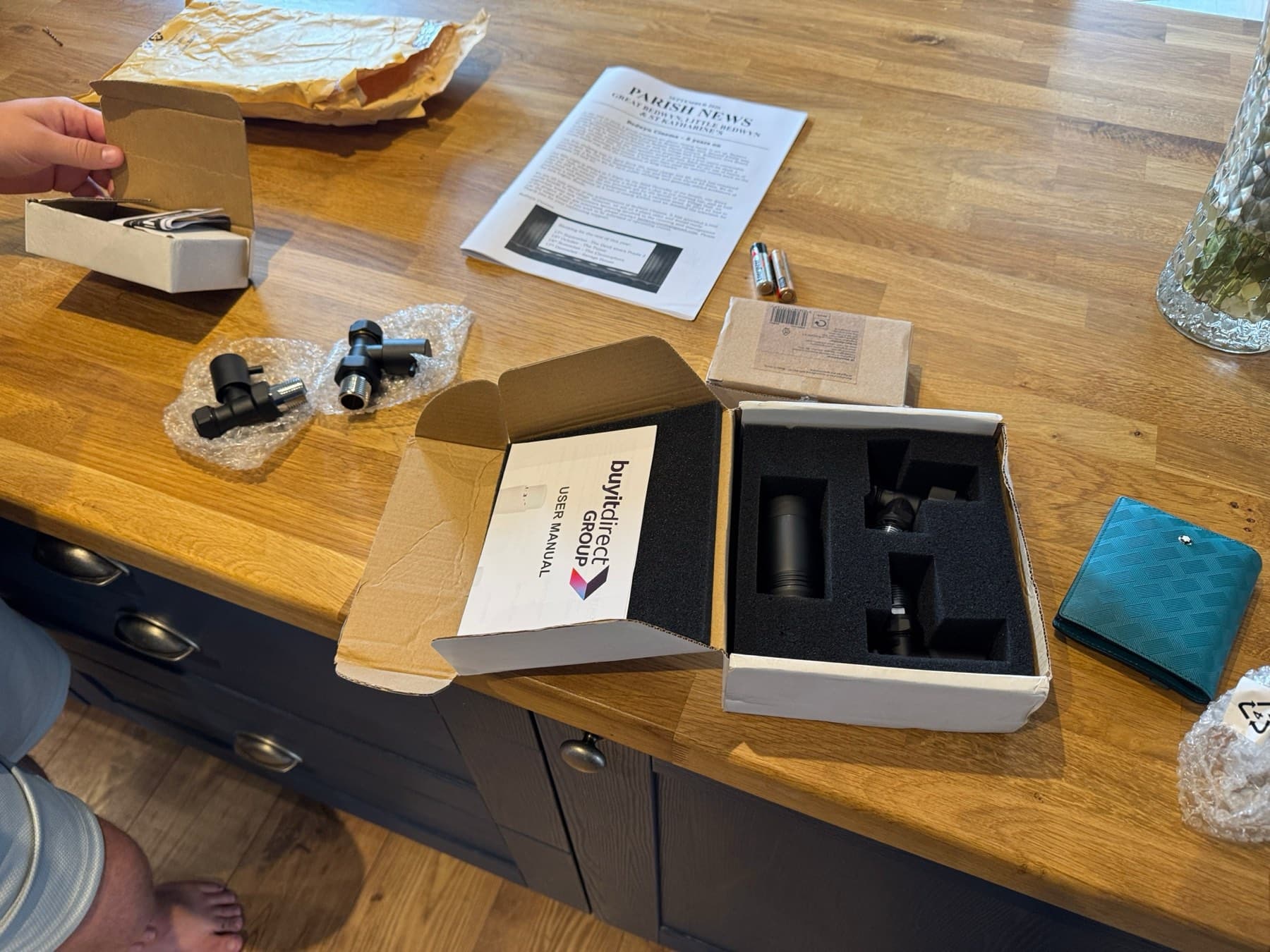
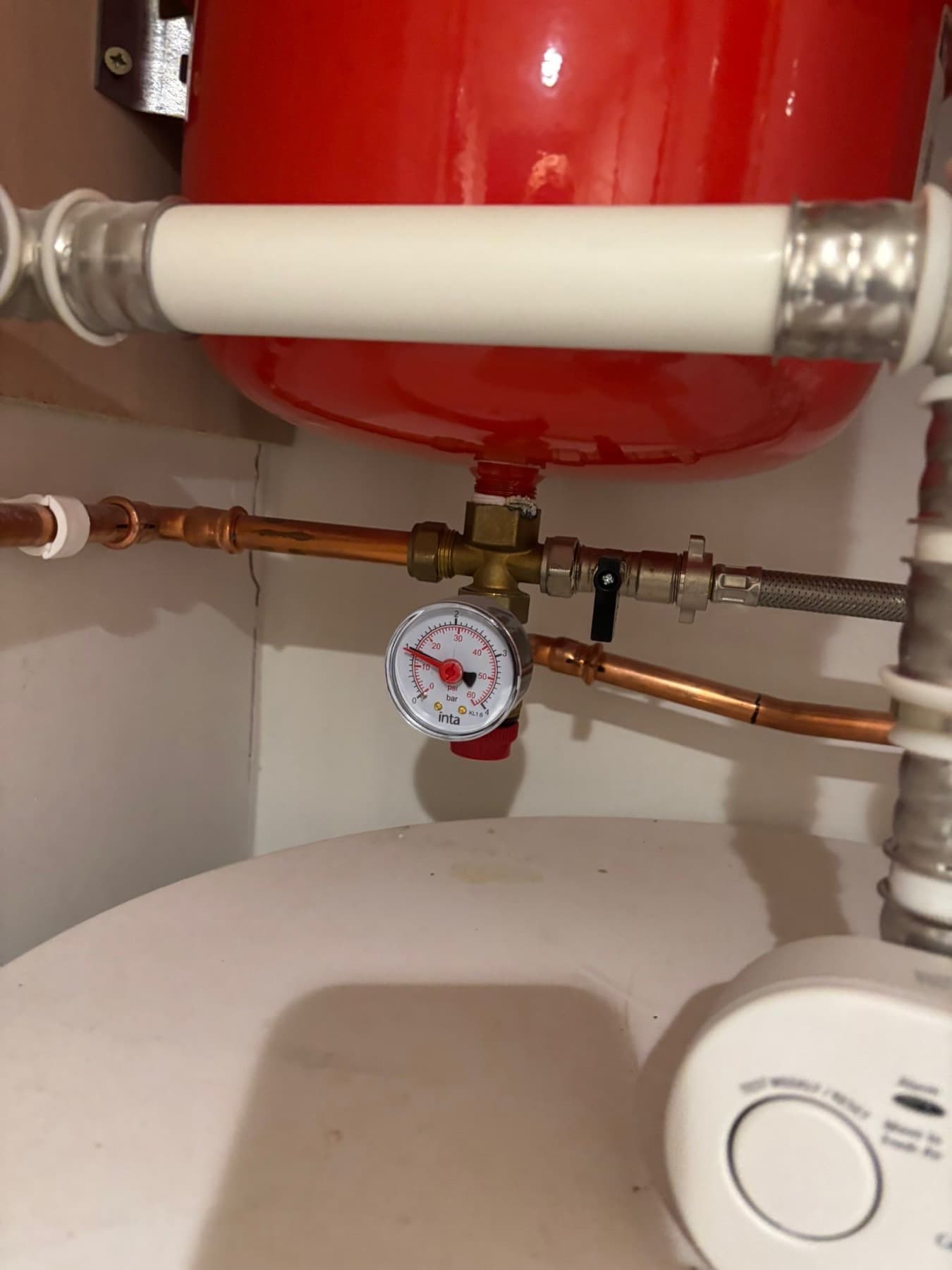
Three parts that decide how much heat you get
Related Guides
Central Heating Sludge Removal
How to read your bleed water, when a chemical clean is enough, and when it has to be a power flush.
Read Guide →Radiator Cold Spots, Diagnosed
Cold at the top is air, cold at the bottom is sludge, cold all over is a valve. What each one needs.
Read Guide →Heat-Pump-Ready Cylinders
What to buy now if a heat pump is in the plan, and why the coil size is the number that matters.
Read Guide →Radiators not doing their job?
Wet-side heating work from £150 + VAT
Cold spots, sludge, a radiator moved or added, power flushing. I am not Gas Safe — the boiler itself is a gas engineer’s job and I will say so rather than guess.