
Hot Water Cylinder Replacement Cost UK 2026
How much does it really cost to replace a hot water cylinder in 2026? From straightforward vented swaps to full unvented upgrades and heat pump cylinders, here are the honest prices from a G3-certified installer covering Andover, Marlborough & Hungerford.
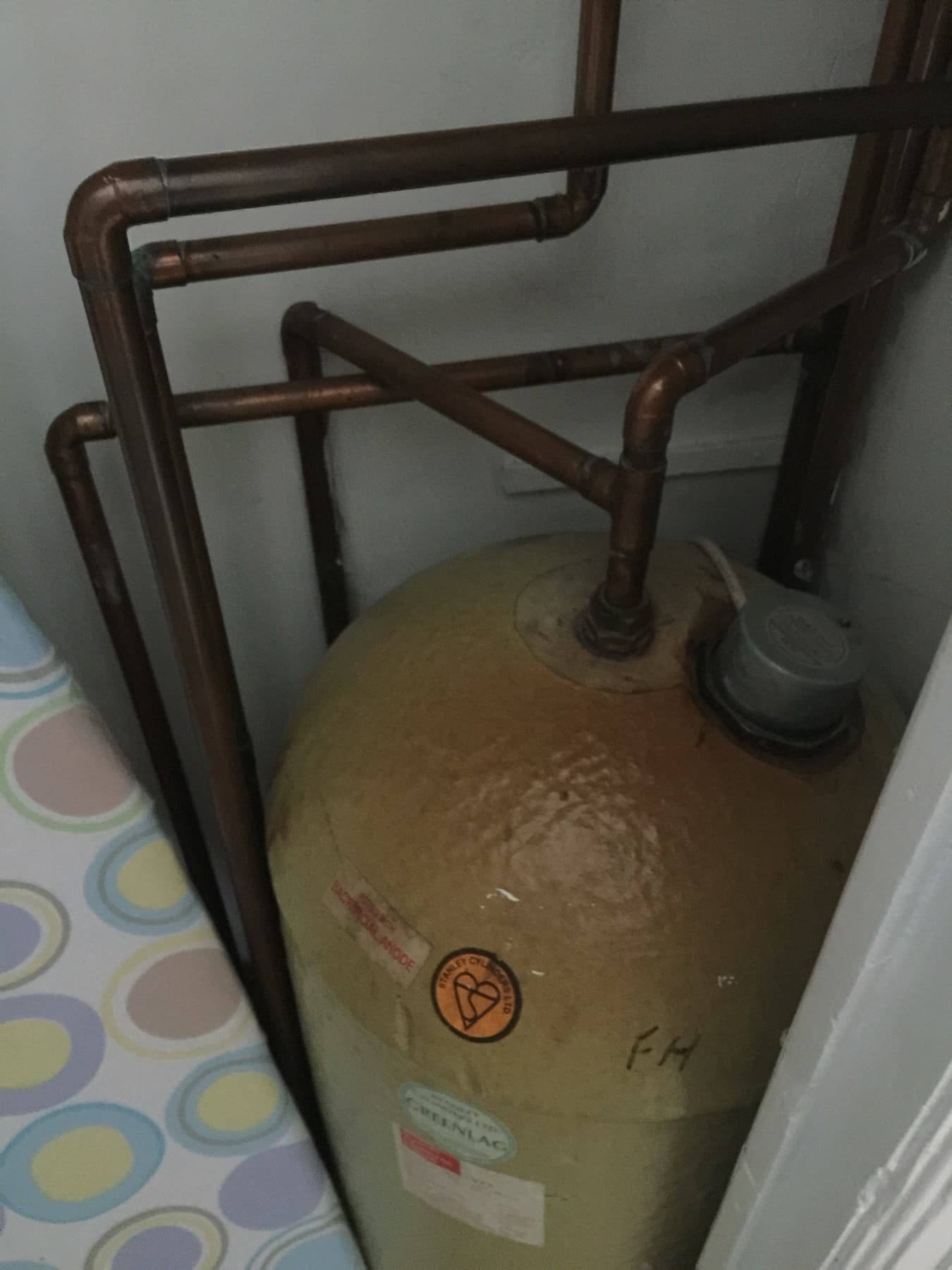
If your hot water cylinder is leaking, producing rusty water, or simply past its best, you’re probably wondering how much a replacement will cost. The answer depends on several factors: the type of cylinder you choose, whether you’re doing a like-for-like swap or upgrading to a different system, and the complexity of your existing pipework.
As a G3-certified plumber installing and replacing hot water cylinders across Andover (SP10/SP11), Marlborough (SN8), and Hungerford (RG17), I’ve put together this guide based on actual jobs I’ve completed. These are real-world prices, not estimates pulled from generic cost databases.
What This Guide Covers
- - Complete cost breakdown by cylinder type
- - Vented vs unvented comparison
- - Labour costs and what affects them
- - Heat pump cylinder pricing
- - Signs your cylinder needs replacing
- - G3 certification requirements
- - What to expect from a professional install
- - Local factors affecting price
Hot Water Cylinder Replacement Costs at a Glance
These prices include the cylinder unit, all necessary components, and professional installation labour. Prices are based on standard installations in Andover, Marlborough & Hungerford properties during 2026.
| Cylinder Type | Unit Cost | Labour | Total Installed |
|---|---|---|---|
Vented (Gravity-Fed) Cylinder Like-for-like replacement | £300-£700 | £300-£500 | £800-£1,500 |
Unvented (Mains-Pressure) Cylinder New install or replacement | £800-£1,800 | £400-£600 | £1,500-£3,000 |
Vented to Unvented Upgrade System conversion required | £800-£1,800 | £500-£600 | £1,800-£3,000 |
Heat Pump Cylinder For ASHP/GSHP systems | £1,200-£2,500 | £500-£600 | £2,000-£4,000 |
Thermal Store Cylinder Multi-fuel / renewable compatible | £1,500-£3,000 | £500-£600 | £2,500-£4,500 |
All prices exclude VAT. Prices based on standard installations. Complex installations involving significant pipework changes, asbestos removal, or structural alterations will cost more.
Rosebourne Plumbing Pricing
Our minimum charge is £150 + VAT for any plumbing work. A like-for-like unvented cylinder, supplied and fitted, starts from £1,640 + VAT; labour alone is about £700 + VAT for a day. We provide fixed-price quotes before any work begins.
Vented vs Unvented Cylinders: Which Do You Have and Which Should You Choose?
Understanding the difference between vented and unvented systems is the first step in working out what your replacement will cost. Each has distinct advantages, installation requirements, and price points.
Vented Cylinder
A vented cylinder is fed by a cold water storage tank, usually in the loft. Water pressure depends on the height difference between the tank and the taps. This is the traditional system found in most UK homes built before 2000.
Advantages
- +Lower purchase and installation cost (£800-£1,500 total)
- +Any competent plumber can install (no G3 needed)
- +Simpler system with fewer components to fail
- +Works regardless of mains water pressure
- +Water reserve in tank during mains supply interruption
Disadvantages
- -Lower water pressure at taps (gravity-dependent)
- -Requires loft space for cold water tank
- -Cold water tank can freeze in harsh winters
- -May need a shower pump for decent shower pressure
Unvented Cylinder
An unvented cylinder connects directly to the mains water supply, delivering hot water at mains pressure to every tap and shower in your home. These systems have become the standard in new-build properties across the UK.
Advantages
- +Mains-pressure hot water to all outlets
- +No loft tank needed, freeing up space
- +Better shower performance without a pump
- +No risk of contamination from open tank
- +Adds value to your property
Disadvantages
- -Higher cost (£1,500-£3,000 total installed)
- -Requires G3-qualified installer (legal requirement)
- -Needs adequate mains pressure (min 1.5 bar)
- -Annual service recommended for safety valves
Which System Is Right for Your Property?
Stick with Vented If...
- - Budget is tight (under £1,200)
- - Mains pressure is low (below 1.5 bar)
- - Your existing system works well enough
- - You only need basic hot water performance
Upgrade to Unvented If...
- - You want better shower pressure
- - You have 2+ bathrooms
- - Mains pressure is good (1.5+ bar)
- - You’re renovating anyway
Choose Heat Pump Cylinder If...
- - You have or plan a heat pump
- - You want to future-proof your home
- - You’re targeting an EPC upgrade
- - Budget allows £2,000-£4,000
What Affects Hot Water Cylinder Replacement Cost?
Two seemingly identical cylinder replacements can vary by hundreds of pounds. Here are the real factors that determine what you’ll pay.
Cylinder Type & Size
A 120-litre vented cylinder costs around £300-£450. The same size in unvented costs £800-£1,200. Larger cylinders (200-300 litres) for bigger households cost proportionally more. Heat pump cylinders with larger coil surface areas command a further premium.
Manufacturer & Brand
Budget brands (RM Cylinders, Gledhill) start lower but may have shorter warranties. Mid-range (Megaflo, Heatrae Sadia) offer good value. Premium brands (Worcester Bosch, Vaillant, Joule) cost more but often come with longer warranties and better build quality.
Accessibility & Location
A cylinder in a ground-floor cupboard with good access is straightforward. One in a tight loft space, or requiring removal down narrow stairs, adds time and labour cost. Some older properties in Marlborough and Hungerford have particularly challenging access.
Pipework Modifications
A like-for-like swap with compatible connections is the cheapest option. If pipe sizes differ, routes need changing, or you’re upgrading from vented to unvented, additional pipework can add £200-£500 to the total cost.
Additional Components
Unvented installations require safety components: expansion vessel (£75-£150), temperature & pressure relief valve (£45-£85), pressure reducing valve (£65-£120), and tundish (£15-£25). These add £200-£380 to the material cost but are legally required.
Old Cylinder Disposal
Removing and disposing of the old cylinder is usually included in a professional quote. However, very old cylinders with asbestos insulation (common in pre-1980 homes) require specialist removal, which can add £200-£400 to the project cost.
Labour Cost Breakdown: What You’re Actually Paying For
Vented Cylinder Swap (£300-£500 Labour)
- - Draining down existing cylinder (30-60 min)
- - Disconnecting and removing old unit
- - Positioning and connecting new cylinder
- - Refilling, bleeding, and testing
- - Checking immersion heater and thermostat
- - Disposing of old cylinder
Typical duration: 3-5 hours
Unvented Cylinder Install (£400-£600 Labour)
- - All tasks above, plus:
- - Installing expansion vessel
- - Fitting pressure reducing valve
- - Installing T&P relief valve with tundish
- - Building Control notification
- - Commissioning and safety testing
- - Removing loft tank (if upgrading from vented)
Typical duration: 1-2 days
G3 Certification: Why It Matters for Unvented Cylinders
If you’re considering an unvented cylinder, understanding the G3 qualification requirement could save you from an illegal installation, invalidated insurance, and serious safety risks.
What Is G3 Certification?
G3 refers to Part G3 of the Building Regulations, which governs the installation of unvented hot water storage systems over 15 litres. Any engineer installing, commissioning, or servicing an unvented cylinder must hold a current G3 qualification.
The qualification covers the safe installation and maintenance of pressurised hot water systems, including understanding thermal expansion, pressure relief, and the multiple safety devices required on every unvented system.
Warning: Illegal Installations
Having an unvented cylinder installed by someone without G3 certification is a Building Regulations offence. It also invalidates your home insurance and could be dangerous. An improperly installed unvented system can produce steam explosions if safety devices are incorrectly fitted.
What G3 Installation Includes
- 1Pre-installation checks - Mains pressure test, flow rate measurement, and assessment of existing pipework capacity.
- 2Safety device installation - Temperature and pressure relief valve, expansion vessel correctly sized for the cylinder, pressure reducing valve, and tundish with visible discharge pipework.
- 3Commissioning - Testing all safety valves, verifying correct operation under normal and fault conditions, and setting thermostat temperatures.
- 4Building Control notification - Formal notification to your local authority that the installation complies with Part G3 of the Building Regulations.
- 5Documentation - Benchmark commissioning checklist, manufacturer warranty registration, and compliance certificate for your records.
Heat Pump Cylinders: Costs & Considerations
With the Boiler Upgrade Scheme offering £7,500 towards heat pump installations, more homeowners across Andover, Marlborough, and Hungerford are making the switch. A heat pump cylinder is an essential part of this system.
Why Heat Pump Cylinders Cost More
Heat pumps operate at lower temperatures than traditional boilers (typically 45-55 degrees C versus 65-80 degrees C for a gas boiler). To compensate, heat pump cylinders need a larger internal coil surface area to extract sufficient heat from the lower-temperature water. They’re also typically larger in capacity (200-300 litres vs 120-180 litres for conventional systems) and have superior insulation to retain heat longer.
Planning ahead? If you’re replacing a cylinder now but considering a heat pump in the next few years, it may be worth investing in a heat pump-compatible cylinder from the start. This avoids paying for two cylinder replacements. Read our detailed guide on heat pump cylinder installation or learn more about our heating services.
7 Signs Your Hot Water Cylinder Needs Replacing
Not sure whether you need a replacement or just a repair? Here are the warning signs that indicate your cylinder is reaching the end of its life.
Visible Leaking
Water pooling around the base of your cylinder is the clearest sign of failure. Small weeps can become major leaks quickly. If the cylinder body itself is leaking (not just a valve), replacement is the only option.
Rusty or Discoloured Water
Brown or orange-tinged hot water indicates internal corrosion. This is common in cylinders over 15 years old, particularly in hard water areas like parts of Andover and Hungerford where limescale accelerates deterioration.
Inconsistent Temperatures
If your hot water temperature fluctuates or the water doesn’t get as hot as it used to, the thermostat or immersion element may be failing. While these can sometimes be replaced individually, in an old cylinder it often signals wider problems.
Excessive Heating Time
A cylinder that takes significantly longer to heat up than it used to has likely built up internal limescale, reducing heat transfer efficiency. This also increases your energy bills. In severe cases, the coil becomes so scaled that replacement is the only practical solution.
Strange Noises
Banging, popping, or rumbling sounds during heating cycles often indicate limescale build-up on the immersion heater or internal coil. While descaling is possible on some cylinders, the noise usually means the problem is advanced.
External Corrosion
Rust patches on the outer casing suggest moisture has been present for some time. While surface rust on fittings is normal, corrosion on the cylinder body itself means the structural integrity is compromised and replacement should be planned promptly.
Age: Over 15-20 Years Old
Even if your cylinder isn’t showing obvious signs of failure, cylinders over 15-20 years old are operating on borrowed time. Modern cylinders are significantly more energy-efficient, better insulated, and designed to work with contemporary heating systems. Proactive replacement before a failure occurs avoids the emergency premium and lets you plan the work at a convenient time. Many properties across Andover still have original cylinders from the 1990s or earlier that are well overdue for replacement.
What Size Cylinder Do You Need?
Choosing the right size cylinder affects both the upfront cost and your daily hot water experience. Too small and you’ll run out of hot water; too large and you’re heating water you don’t use.
| Household Size | Bathrooms | Recommended Size | Approx. Unit Cost |
|---|---|---|---|
| 1-2 people | 1 | 90-120 litres | £300-£900 |
| 2-3 people | 1-2 | 120-170 litres | £400-£1,200 |
| 3-4 people | 2 | 170-210 litres | £600-£1,500 |
| 4-5 people | 2-3 | 210-300 litres | £800-£2,000 |
| 5+ people | 3+ | 300+ litres | £1,200-£2,500+ |
These are general guidelines. Actual sizing depends on usage patterns, number of showers vs baths, and whether you have a dishwasher and washing machine using hot water. We always assess your specific needs before recommending a size.
What to Expect from a Professional Cylinder Replacement
Whether you’re in Andover, Marlborough, Hungerford, or the surrounding villages, here’s exactly what happens when Rosebourne Plumbing replaces your hot water cylinder.
Survey & Quote
I visit your property to assess the existing cylinder, check access, measure mains pressure (for unvented systems), and discuss your hot water needs. You receive a written fixed-price quote with no hidden extras. This survey is free of charge.
Scheduling & Preparation
Once you accept the quote, we schedule the work at a time that suits you. I order the cylinder and all required components. For unvented installations, I handle the Building Control notification. You’ll need to plan for being without hot water during the installation.
Installation Day
The old cylinder is drained down and safely removed. The new cylinder is positioned, connected to your heating and water systems, and all safety devices are fitted (for unvented). The system is filled, bled, and thoroughly tested. I clean up all work areas and take the old cylinder away for recycling.
Handover & Documentation
I walk you through the new system, show you the controls, and explain how to get the best from your new cylinder. You receive all documentation including the manufacturer’s warranty, benchmark commissioning record, and (for unvented systems) the Building Regulations compliance certificate. All work comes with our 12-month workmanship guarantee.
Real-World Cost Examples from Local Installations
These are based on actual cylinder replacement jobs I’ve completed across the Andover, Marlborough, and Hungerford areas. Every job is different, but these give you a realistic idea of what to budget.
Like-for-Like Vented Swap
3-bed semi in Andover (SP10). Old 120L vented cylinder replaced with new equivalent. Good access in airing cupboard. Straightforward connections.
Unvented Cylinder Replacement
4-bed detached in Marlborough (SN8). Existing unvented cylinder replaced with new 170L unit. Expansion vessel replaced. Safety valves updated.
Heat Pump Cylinder Install
5-bed village house in Hungerford (RG17). 250L heat pump-ready twin-coil cylinder installed as part of ASHP preparation. New pipework runs required.
Frequently Asked Questions: Hot Water Cylinder Replacement Costs
Answers to the most common questions homeowners in Andover, Marlborough, and Hungerford ask about cylinder replacement pricing and installation.
How much does it cost to replace a hot water cylinder in 2026?
The total cost to replace a hot water cylinder in 2026 ranges from £800 to £4,000 depending on the type. A vented (gravity-fed) cylinder replacement costs £800-£1,500 including labour. An unvented (mains-pressure) cylinder replacement costs £1,500-£3,000. Heat pump compatible cylinders cost £2,000-£4,000. Labour typically accounts for £300-£600 of the total. At Rosebourne Plumbing, our minimum charge is £150 + VAT, with typical cylinder installations starting from £225 + VAT for the labour element.
Do I need a G3-qualified engineer to install an unvented cylinder?
Yes, by law in England and Wales, unvented hot water cylinders over 15 litres must be installed by a G3-qualified engineer. This is a Building Regulations requirement (Part G3). The installer must notify Building Control upon completion. Installing without G3 certification is illegal and invalidates your insurance. Will Gaze at Rosebourne Plumbing holds current G3 certification for unvented cylinder installations across Andover, Marlborough and Hungerford.
Is it worth upgrading from a vented to an unvented cylinder?
Upgrading from vented to unvented is worth it if you want mains-pressure hot water throughout your home, better shower performance without a pump, and to free up loft space by removing the cold water storage tank. The upgrade typically costs £1,500-£3,000 but delivers 30-50% better flow rates. It also adds property value. However, your mains water pressure must be at least 1.5 bar for an unvented system to work properly.
How long does a hot water cylinder replacement take?
A like-for-like vented cylinder replacement typically takes 3-5 hours. Replacing a vented cylinder with an unvented system takes 1-2 days because additional pipework, safety valves, and an expansion vessel need installing. Heat pump cylinder installations usually take 1-2 days. At Rosebourne Plumbing, we always provide a realistic timeframe before starting work.
What are the signs that my hot water cylinder needs replacing?
The main signs your cylinder needs replacing include: rusty or discoloured hot water, visible corrosion or rust on the cylinder body, water pooling around the base, inconsistent water temperatures, the cylinder taking much longer to heat up, unusual noises during heating, and the cylinder being over 15-20 years old. If you notice any leaking from the cylinder itself, replacement is usually necessary rather than repair.
Can I get a hot water cylinder replaced the same day in Andover or Marlborough?
Same-day like-for-like vented cylinder replacements are sometimes possible if we have the right cylinder in stock or can source it quickly. For planned replacements, we typically schedule within 3-5 working days across Andover (SP10/SP11), Marlborough (SN8), and Hungerford (RG17). Unvented installations always require advance planning due to the Building Control notification requirement. Call 01264 502027 to discuss your timescale.
Related Articles
Unveiling the True Costs of Upgrading to an Unvented Hot Water Cylinder
Deep-dive into unvented cylinder upgrade costs including hidden expenses, running costs, and long-term ROI calculations.
Complete Hot Water Cylinder Guide UK 2026
Compare 11 cylinder brands, understand sizing, and learn everything about vented, unvented, and heat pump cylinders.
Heat Pump Cylinder Guide UK
Everything you need to know about heat pump cylinders, including sizing, costs, and compatibility with air and ground source heat pumps.
Need a Hot Water Cylinder Replacement?
G3-certified installer covering Andover (SP10/SP11), Marlborough (SN8) & Hungerford (RG17). Free survey and fixed-price quote. No hidden costs.
Minimum charge from £150 + VAT | Typical installations from £225 + VAT labour | View our hot water services
Thinking about a new cylinder?
Get a guide price in 30 seconds
Unvented cylinders supplied and fitted from £1,640 + VAT by a G3-qualified plumber. Pick the size and job type, see a price range, no email needed.